Ordinary and Extraordinary
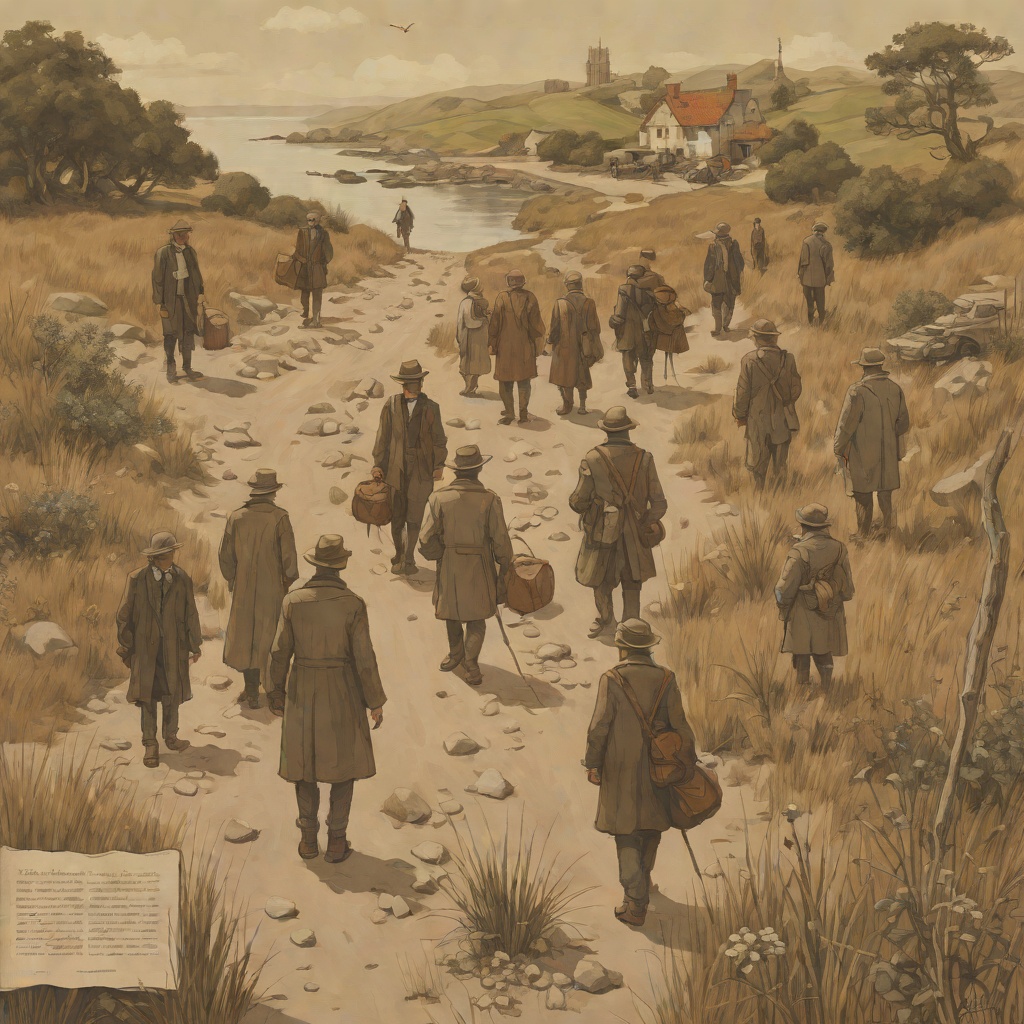
The Unlikely Pilgrimage of Harold FryOrdinary and Extraordinary is the philosophical heart of the novel, a concept that Harold Fry comes to embody through his unplanned pilgrimage from Kingsbridge to Berwick-upon-Tweed. The idea first takes hold in a phone box when Harold, having just learned that his former colleague Queenie Hennessy is dying of cancer, decides to walk the length of England rather than post a letter. The decision comes with no deliberation and no reasoning; it arrives in the same moment as the idea itself, and Harold finds himself laughing at the simplicity of it. He pictures Queenie dozing at one end of England and himself in a phone box at the other, with roads, fields, rivers, woods, moors, peaks and valleys, and so many people in between that he would meet and pass. The concept asserts that an ordinary man, without special skills or resources, can undertake an extraordinary act simply by walking, and that this act can carry meaning beyond logical explanation.
The Ordinary Man's Extraordinary Decision
Harold's decision is immediately tested by those who see only its absurdity. His wife Maureen, sixty-five like him, points out that he only ever walks to get to the car, that he has left his mobile phone, and that he has no idea where he will sleep. Her skepticism is sharp: she tells him she would like to see him get past Dartmoor. Yet Harold's appeal is childlike, as if the choice were hers when he has clearly already decided. He insists that it is not enough to post a letter, that he needs to do this. The concept of the ordinary man doing something extraordinary is precisely what Maureen cannot grasp, and her resistance frames the central tension of the pilgrimage. Harold's own body seems to confirm her doubts: in his hotel room he inspects his feet with the care of a man unused to walking, finding them soft and pale, tender around the nails, with a possible blister forming at the top of his heel. He is quietly proud of them nonetheless, considering his years and his lack of fitness, and pronounces them not bad. The ordinary man, with his ordinary feet, is about to attempt the extraordinary.
Walking as the Measure of the World
As Harold walks, the concept deepens. He discovers that the world is made up of people putting one foot in front of the other, and that a life might appear ordinary simply because the person living it has done so for a long time. He can no longer pass a stranger without acknowledging the truth that everyone is the same and also unique, and that this is the dilemma of being human. The smallness of people fills him with wonder and tenderness, and the loneliness of that too. He walks so surely it is as if all his life he had been waiting to get up from his chair. The ordinary details of the landscape become extraordinary through his attention: the yellow clouds of forsythia, the trails of purple aubrietia, the young willow shaking in a fountain of silver. He measures distance not in miles but with his remembering, unleashing a past he had spent twenty years seeking to avoid. The concept becomes a way of seeing: the world is both connected and passing through, and Harold is both a part of things and not.
The Challenge of Logic and the Test of Faith
Harold's conviction is tested by a very famous actor who offers him a car and a driver, insisting he could be in Berwick that night. The actor argues that it makes no difference how he gets there, that he has only to see her. Harold needs the actor to know that you could be ordinary and attempt something extraordinary without being able to explain it in a logical way. But the temptation is real; he imagines sitting in the warmth of the car and being there in hours, and he has to grip his hands to stop them from shaking. He tells the actor quietly that he has to keep walking, although he knows he is no longer certain. The concept here is tested against pragmatism, and Harold's faith wavers. He must remain true to the feeling that inspired him in the first place, even though other people would do it in a different way. He keeps to the roads, sticks to his yachting shoes despite the wear and tear, and trusts a different map made up of all the people and places he has passed. When a person becomes estranged from the things they know, strange things take on a new significance, and it seems important to allow himself to be true to the instincts that make him Harold, as opposed to anyone else.
The Pilgrimage as Public Spectacle
The concept gains public dimension when Harold meets Mick, a convivial young man with soft blue eyes and sideburns that curl below his cheekbones. Mick buys him a lemonade and toasts his courage, asking if he really believes he will make it to Berwick. Harold answers that if he just keeps putting one foot in front of the other, it stands to reason that he is going to get there; he has begun to think people sit far more than they are supposed to, and asks why else would they have feet. Mick declares that what Harold is doing is a pilgrimage for the twenty-first century, awesome, the kind of story people want to hear. He takes Harold's photograph on his mobile phone, just to remember him. The ordinary man has become extraordinary in the eyes of others, and the concept is now circulating beyond Harold himself. Yet the strangest part is that a driver might overtake him and briefly observe an old fellow in shirt and tie, perhaps a pair of yachting shoes, and see no more than another man off down the road. Harold finds this so funny, and he is so happy, so much at one with the land beneath his feet, that he can laugh and laugh with the simplicity of it.
The Crisis at the Gates
Eighty-seven days after setting out to post a letter, Harold arrives at the gates of St Bernadine's Hospice, having walked six hundred and twenty-seven miles including mistakes and diversions. His mind flees back over the miles: roads, hills, houses, fences, shopping centres, streetlights and post boxes, and there is nothing extraordinary about any of them. They are simply things he has passed, that anyone might have passed. The thought fills him with sudden anguish, and he is afraid at the point where he had least expected to feel anything other than triumph. How did he ever believe that those very commonplace things would add up to something more? His finger remains suspended over the buzzer, not pressing it. What had it all been about? The concept collapses at the moment of its apparent fulfillment, and Harold turns from the hospice, replacing his rucksack on his shoulder. No one is expecting him, and no one appears to notice his arrival or his departure. The most extraordinary moment of Harold's life has come and gone without trace. The ordinary world does not recognize the extraordinary when it passes through.
The Ordinary as the Extraordinary
The concept resolves itself in the novel's final scene, when Harold and Maureen stand at the water's edge, laughing helplessly at something that was not even witty. They cannot say it, cannot get it out; each time they open their mouths they are hit by a fresh wave of helpless laughter, and they have to grip hands to steady themselves. Harold wipes his eyes with his handkerchief and becomes sensible again, observing that it was ordinary, that it must have been funny because they were happy. The ordinary moment, shared between two people who have been estranged for twenty years, is revealed as the true extraordinary. The concept completes its arc: the extraordinary is not a grand gesture or a public spectacle, but the ordinary lived fully, with attention and love. Harold's six hundred and twenty-seven miles were never about reaching Berwick; they were about learning to see the extraordinary in the commonplace, and to find happiness in the ordinary act of being alive.